Category: News

  • Workshop Report: Establishing Criteria for Identifying Somali Fake News

    Workshop Report: Establishing Criteria for Identifying Somali Fake News

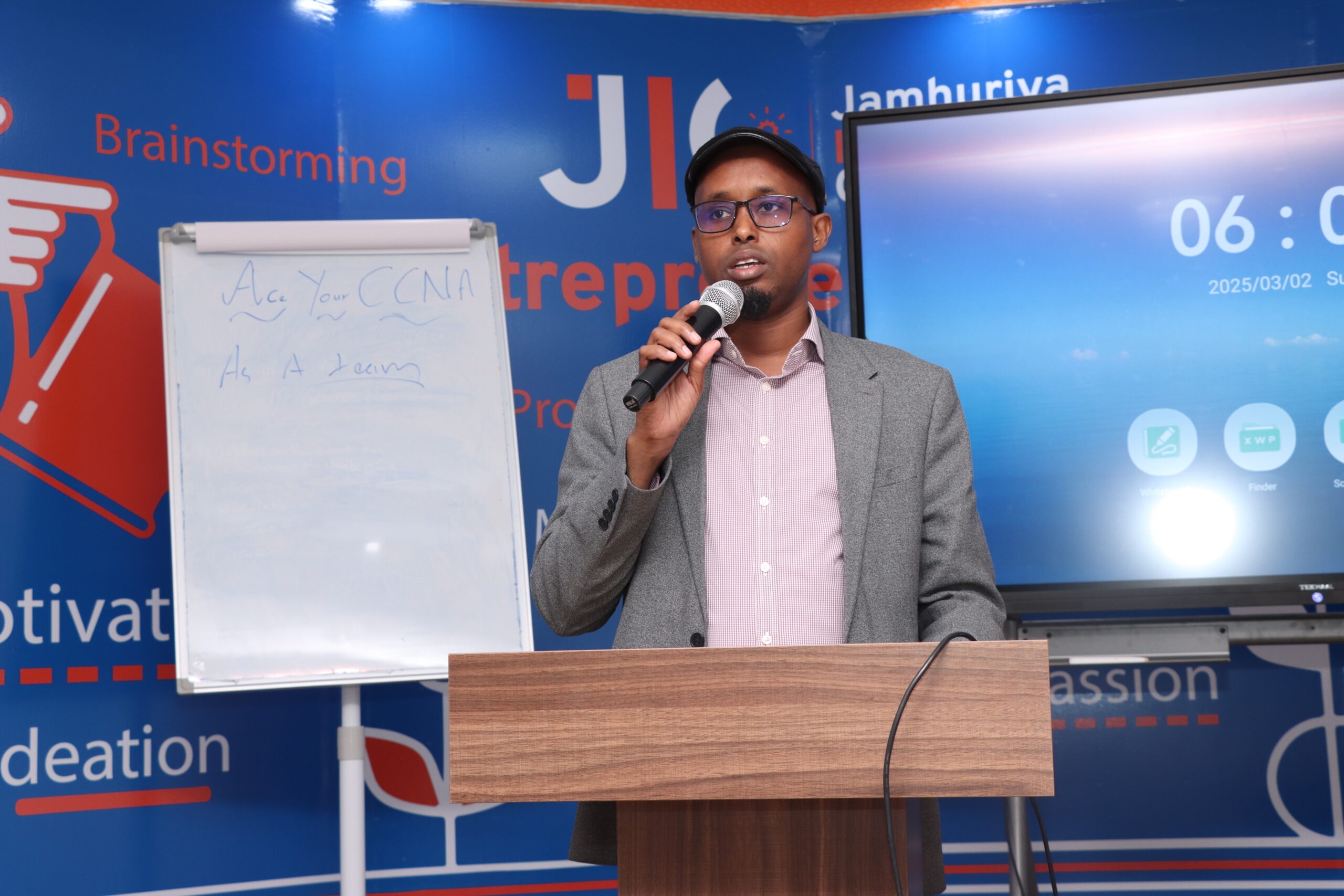
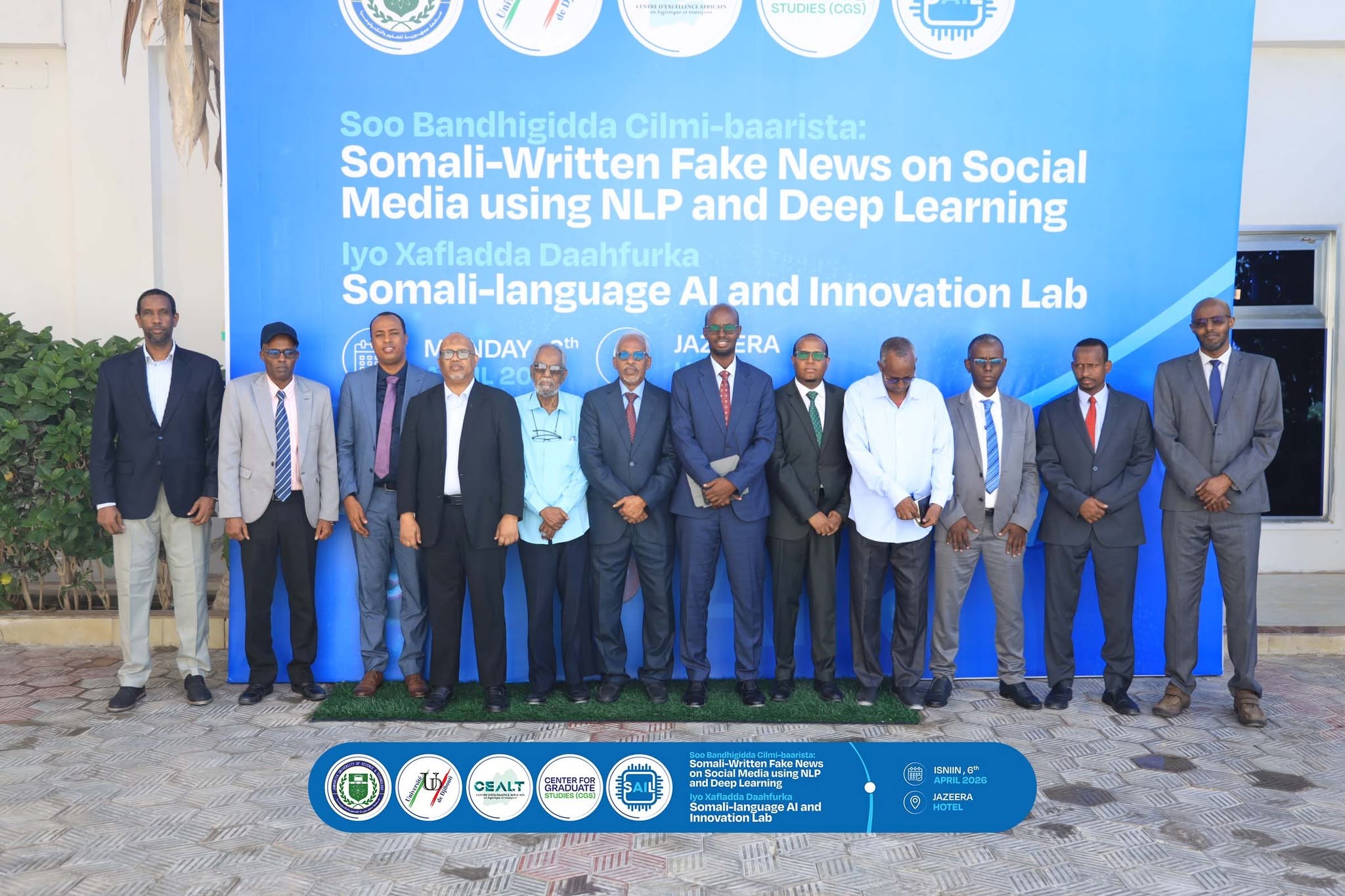
    To enhance research and practical methodologies for identifying fake news in Somali contexts, our project team conducted a specialized workshop aimed at formulating precise and contextually relevant criteria for detecting fake news in Somali-language media and online platforms.

    The event convened seasoned media professionals and specialists possessing firsthand knowledge and practical expertise in matters concerning misinformation, disinformation, and fake news. The event was enhanced by the significant contributions of Hassan Ali Osman (Istiila) and Mohamed Abdimalik Hussein, who offered expert insights into the nature, patterns, and issues of fake news within the Somali media landscape.

    The primary aim of the workshop was to collaborate establish a framework of criteria for identifying, classifying, and analysing false news in Somali-language content. Participants analysed the emergence of fake news across many platforms, including social media, online news sites, and informal digital communication channels. Special emphasis was placed on the linguistic, cultural, political, and social attributes that influence the generation and dissemination of incorrect or misleading information within Somali society.

    The team established a systematic framework for identifying fake news in Somali through expert consultation and group debate. This methodology aims to assist scholars, media analysts, fact-checkers, and data annotators in evaluating news material more methodically.

    The criteria will facilitate the categorisation of Somali news items according to indicators like source credibility, factual accuracy, evidence availability, deceptive framing, emotional manipulation, political bias, hyperbole, and absence of verified references.

    The session was particularly significant as the identification of fake news in Somali necessitates criteria that align with the local media landscape, linguistic usage, public communication norms, and socio-political context. The session underscored the necessity for a localised and research-driven framework for Somali news analysis, rather than solely depending on basic international standards.

    At the conclusion of the workshop, the project team and invited specialists effectively established an initial set of criteria for detecting false news in Somali-language content. These criteria will provide a crucial foundation for subsequent research, dataset building, annotation guidelines, and future endeavours in automated Somali fake news identification.

    The workshop substantially advanced the establishment of a systematic, evidence-based, and contextually pertinent strategy for addressing disinformation and enhancing information integrity within Somali media.
  • Workshop Report on Part-of-Speech Tagging and Lemmatisation for the Somali Language

    Workshop Report on Part-of-Speech Tagging and Lemmatisation for the Somali Language

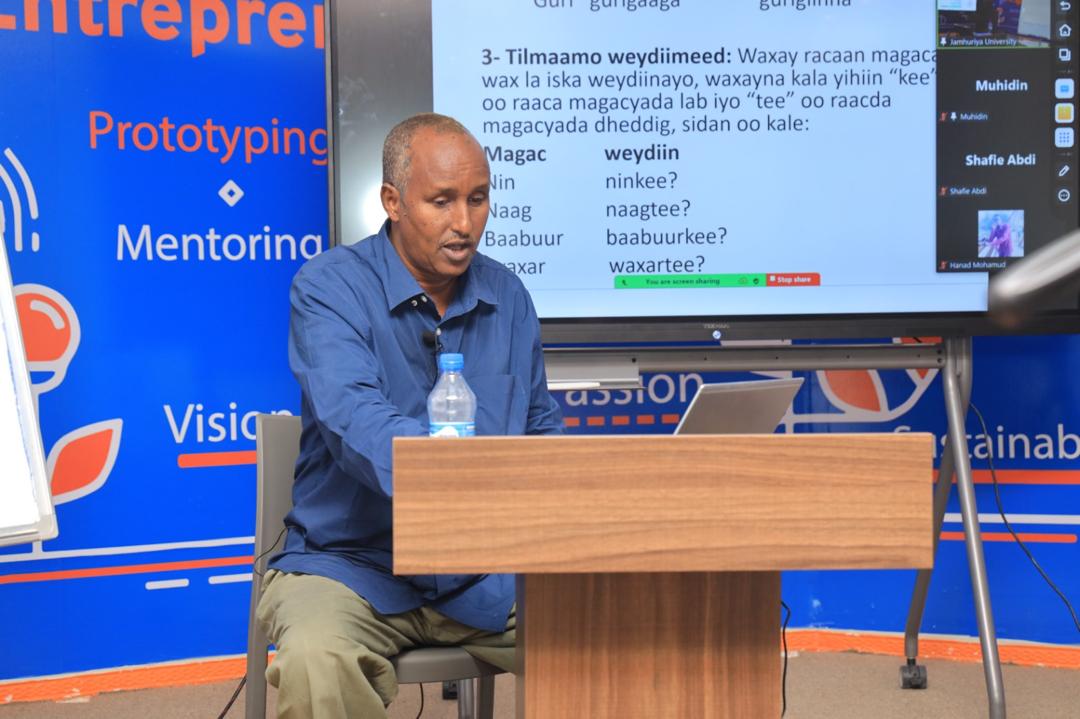
    A capacity-building workshop on Part-of-Speech (POS) Tagging and Lemmatisation for the Somali language was successfully held at Jamhuriya University of Science and Technology. The session was conducted by the team associated with the Somali Fake News Identification Project, with technical assistance and training facilitated by the Academy of Science, Culture and Literature.

    The training session was conducted by Mohamed Mohamud Guled (Daqarre), a member of the Somali Language Committee of the Academy of Science, Culture and Literature, and Chairperson of the Sub-Committee on Grammar and Language Rules.

    The workshop’s major aim was to improve participants’ comprehension of essential computational linguistics techniques employed in the analysis and processing of Somali text. The training concentrated on POS Tagging, which entails the allocation of grammatical categories to words, including nouns, verbs, adjectives, prepositions, and other parts of speech. Participants were also introduced to Lemmatisation, a procedure that reduces words to their base or dictionary form.

    The session was especially pertinent to the Somali Fake News Identification Project, as POS tagging and lemmatisation are fundamental elements in Natural Language Processing (NLP). These strategies facilitate the study of Somali textual data, enhance the recognition of linguistic patterns, and aid in the creation of automated systems proficient in identifying misleading or deceptive information in Somali-language content.

    Participants acquired practical knowledge on the classification, analysis, and preparation of Somali words for computer applications. The workshop emphasised the necessity of creating high-quality digital linguistic resources for the Somali language, particularly in domains such as text categorisation, information retrieval, machine learning, and disinformation detection.

    In conclusion, the workshop offered a significant learning opportunity to enhance understanding of Somali language technology and their application in digital research. Gratitude is expressed to the Somali Fake News Identification Project team for orchestrating the workshop, the Academy of Science, Culture and Literature for its technical support, Jamhuriya University of Science and Technology for providing the venue, and Mohamed Mohamud Guled (Daqarre) for conducting an enlightening and professionally beneficial training session.

  • Showcasing Somali-Written Fake News Detection Research Using NLP and Deep Learning

    Showcasing Somali-Written Fake News Detection Research Using NLP and Deep Learning

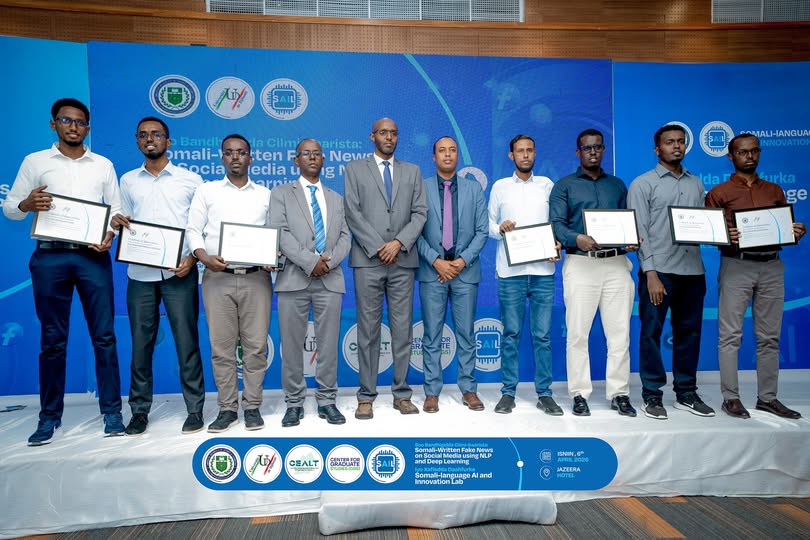
    The Somali-language AI and Innovation Lab (SAIL) is proud to showcase the research project titled “Somali-Written Fake News on Social Media Using NLP and Deep Learning.” This research focuses on one of the most important challenges in today’s digital society: the spread of false, misleading, and harmful information across social media platforms.

    As social media continues to play a major role in how people communicate, share news, and access information, the need for reliable tools to detect fake news has become increasingly important. For Somali-speaking communities, this challenge is even more significant because there are limited digital tools, datasets, and AI systems designed specifically for the Somali language.

    This research project applies Natural Language Processing (NLP) and Deep Learning techniques to analyze Somali-written content shared on social media. The goal is to develop intelligent methods that can help identify fake news, misleading messages, and harmful online content written in Somali. By focusing on the Somali language, the project contributes to closing the gap between global AI advancement and the needs of local communities.

    During the showcase, the research team presents the background of the study, the problem it addresses, the methodology used, and the expected impact of the project. The presentation highlights how AI can be used to support digital safety, improve information reliability, and promote responsible use of social media.

    The project also demonstrates the importance of building Somali-language resources for artificial intelligence. These resources can support future research in areas such as text classification, misinformation detection, hate speech detection, sentiment analysis, and other Somali NLP applications.

    This research is an important step toward strengthening Somali-language AI innovation. It reflects SAIL’s commitment to supporting practical, research-based solutions that address real challenges facing society. It also encourages students, researchers, and technology professionals to explore how artificial intelligence can be used to create meaningful impact in Somali-speaking communities.

    By showcasing this project, SAIL aims to promote academic excellence, encourage collaboration, and inspire further innovation in Somali-language technology. The research stands as a strong example of how local problems can be addressed through modern AI methods, research collaboration, and a commitment to community-centered innovation.

  • JUST Research Team Wins Best Paper Award at ACL 2025 AfricaNLP

    JUST Research Team Wins Best Paper Award at ACL 2025 AfricaNLP

    Jamhuriya University of Science and Technology proudly celebrates a remarkable academic achievement by a team of Somali researchers whose work has received international recognition at one of the world’s leading conferences in computational linguistics.

    The research team, consisting of Shuab Daud Ahmed, Yahye Ali Isse, and Hanad Mohamud Mohamed, together with their supervisor Dr. Muhidin Abdullahi Mohamed, co-founder and research advisor of JUST and lecturer at Aston University in the United Kingdom, won the Best Paper Award at the 63rd Annual Meeting of the Association for Computational Linguistics (ACL 2025) under the AfricaNLP track.

    The conference was held in Vienna, Austria, from July 27 to August 1, 2025, bringing together researchers, scholars, and innovators from across the world. The team’s paper, titled “Detection of Somali-written Fake News and Toxic Messages on Social Media Using Transformer-based Language Models,” was selected as the top paper among more than 100 submissions from researchers across Africa.

    This award reflects the originality, academic quality, and practical importance of the research. The study focuses on a critical challenge in today’s digital world: the spread of fake news and toxic content on social media, particularly in the Somali language. By applying transformer-based language models, the research contributes to the development of advanced Natural Language Processing tools that can help identify harmful and misleading online content.

    The project originated from a Master’s thesis in the Master of Science in Data Science program at the Jamhuriya Center for Graduate Studies (JCGS). It also represents strong academic collaboration among Somali and regional institutions. The paper was co-authored by Dr. Fuad Mire from Somali National University and Dr. Hussein Ahmed Assoweh from the University of Djibouti.

    This achievement is a proud milestone not only for Jamhuriya University but also for Somali higher education and Somali-language AI research. It demonstrates the growing potential of Somali scholars in the field of Natural Language Processing and highlights the importance of investing in research that addresses real-world challenges facing Somali-speaking communities.

    SAIL extends its warmest congratulations to the entire research team for this outstanding accomplishment. Their success serves as an inspiration for students, researchers, and innovators working to advance Somali-language technology, artificial intelligence, and digital transformation.

  • Celebrating the Success of Jamhuriya University’s Research Grant Project on Identifying Somali Fake News through Natural Language Processing and Deep Learning

    Celebrating the Success of Jamhuriya University’s Research Grant Project on Identifying Somali Fake News through Natural Language Processing and Deep Learning

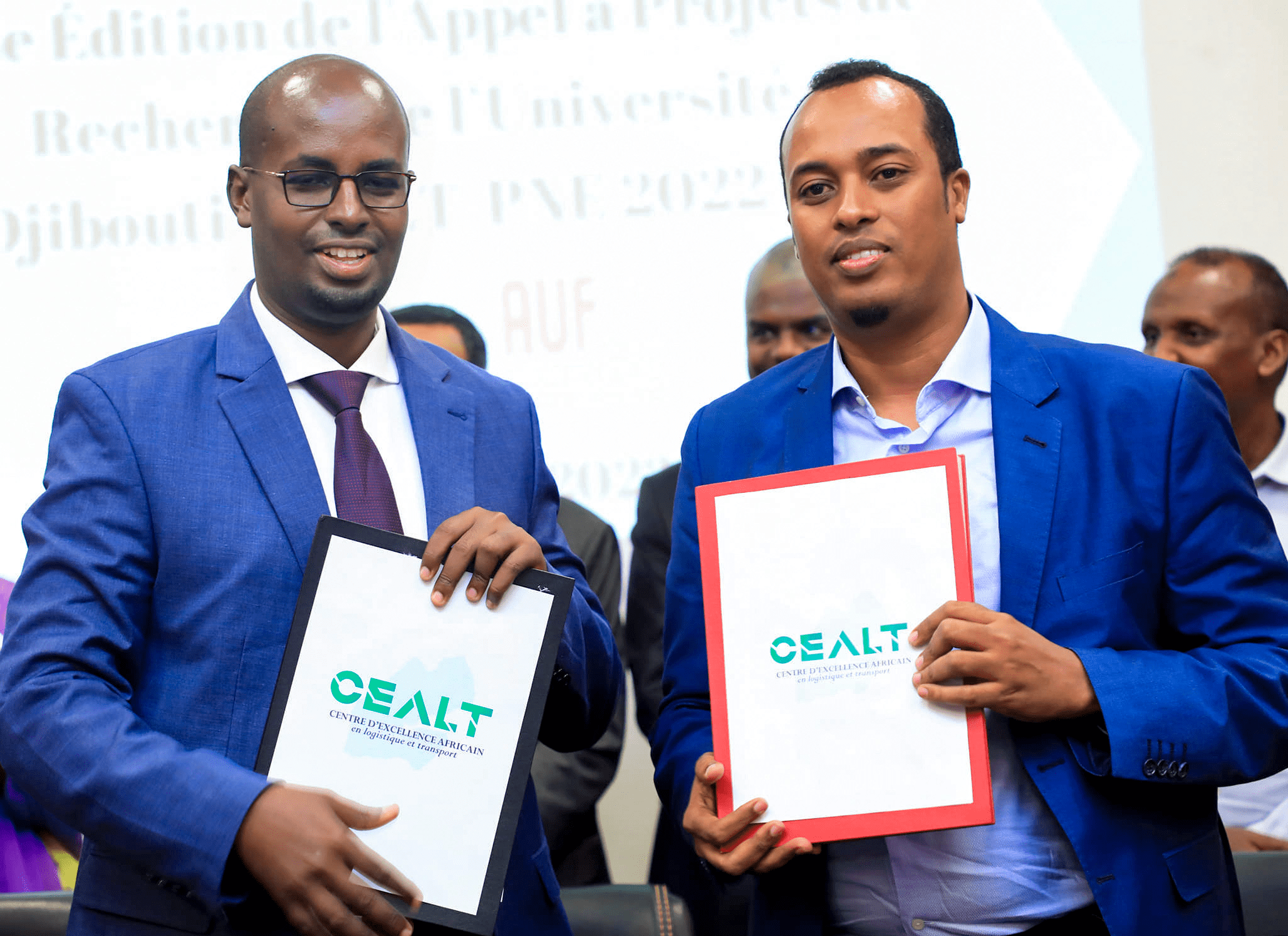
    We are thrilled to announce the recent participation of Eng. Mohamed A. Mohamud, the President of Jamhuriya University of Science and Technology, in the signing ceremony of the winning research project at the prestigious CEALT University of Djibouti. The project, titled Identification of Somali Fake News on social media using Natural Language Processing and Deep Learning, was submitted by the Center for Higher Studies at Jamhuriya University and emerged as one of the 16 victorious research projects out of the 46 entries received from different countries.

    We extend our warmest congratulations to the talented researchers involved in the project – Dr. Muhidin, Dr. Fu’ad, Eng. Shafie, and Eng. Hanad. Their outstanding abilities and relentless dedication have brought great pride and recognition to both Jamhuriya University and the researchers themselves.

    The significance of this research project cannot be overstated, as it addresses the pressing issue of fake news on social media platforms. The proliferation of misinformation has become increasingly rampant, and it is essential to develop effective methods to identify and combat this harmful phenomenon. By utilizing advanced techniques such as natural language processing and deep learning, our researchers aim to detect and classify misleading information accurately and efficiently.