Category: Workshop

  • Workshop Report: Establishing Criteria for Identifying Somali Fake News

    Workshop Report: Establishing Criteria for Identifying Somali Fake News

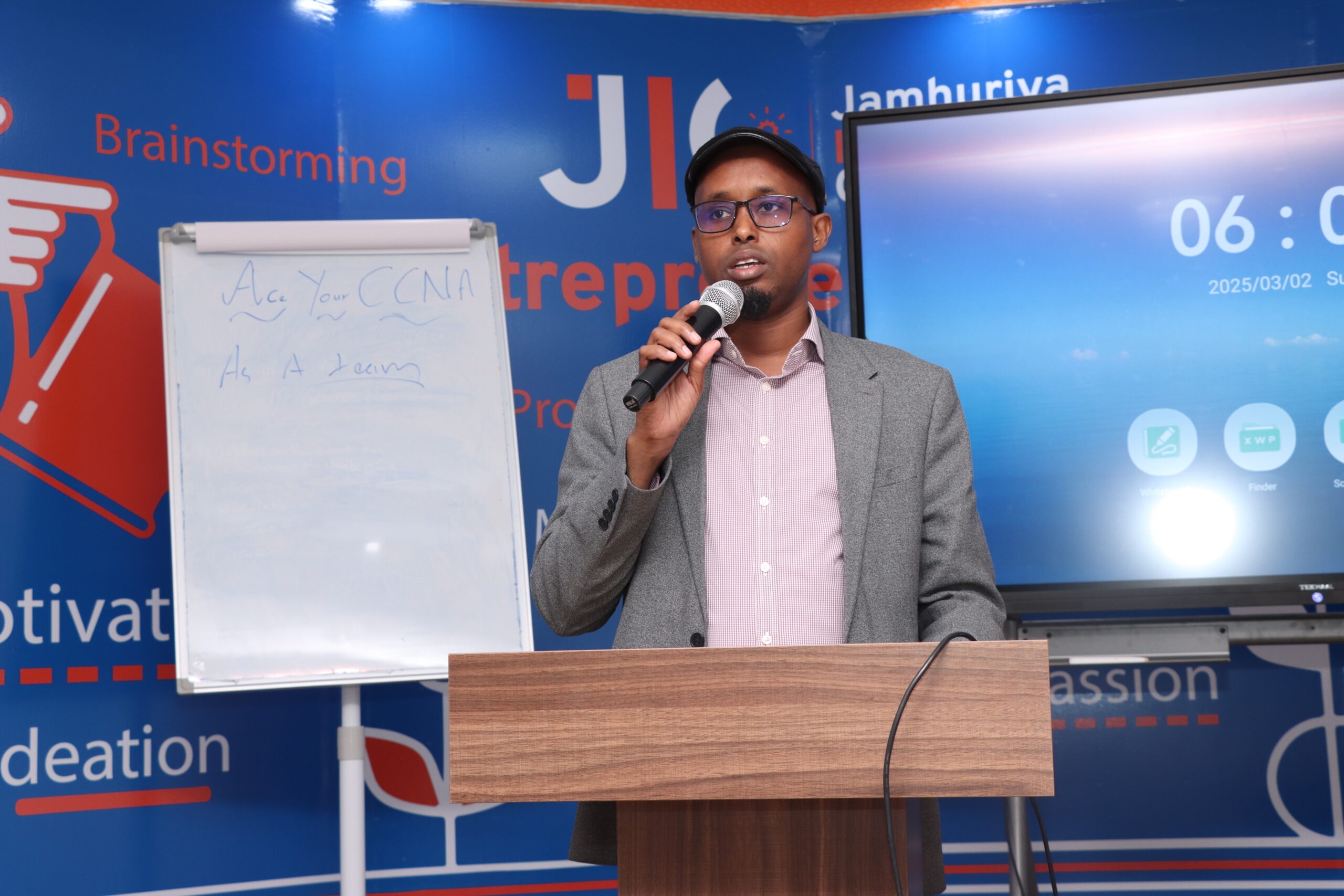
    To enhance research and practical methodologies for identifying fake news in Somali contexts, our project team conducted a specialized workshop aimed at formulating precise and contextually relevant criteria for detecting fake news in Somali-language media and online platforms.

    The event convened seasoned media professionals and specialists possessing firsthand knowledge and practical expertise in matters concerning misinformation, disinformation, and fake news. The event was enhanced by the significant contributions of Hassan Ali Osman (Istiila) and Mohamed Abdimalik Hussein, who offered expert insights into the nature, patterns, and issues of fake news within the Somali media landscape.

    The primary aim of the workshop was to collaborate establish a framework of criteria for identifying, classifying, and analysing false news in Somali-language content. Participants analysed the emergence of fake news across many platforms, including social media, online news sites, and informal digital communication channels. Special emphasis was placed on the linguistic, cultural, political, and social attributes that influence the generation and dissemination of incorrect or misleading information within Somali society.

    The team established a systematic framework for identifying fake news in Somali through expert consultation and group debate. This methodology aims to assist scholars, media analysts, fact-checkers, and data annotators in evaluating news material more methodically.

    The criteria will facilitate the categorisation of Somali news items according to indicators like source credibility, factual accuracy, evidence availability, deceptive framing, emotional manipulation, political bias, hyperbole, and absence of verified references.

    The session was particularly significant as the identification of fake news in Somali necessitates criteria that align with the local media landscape, linguistic usage, public communication norms, and socio-political context. The session underscored the necessity for a localised and research-driven framework for Somali news analysis, rather than solely depending on basic international standards.

    At the conclusion of the workshop, the project team and invited specialists effectively established an initial set of criteria for detecting false news in Somali-language content. These criteria will provide a crucial foundation for subsequent research, dataset building, annotation guidelines, and future endeavours in automated Somali fake news identification.

    The workshop substantially advanced the establishment of a systematic, evidence-based, and contextually pertinent strategy for addressing disinformation and enhancing information integrity within Somali media.
  • Workshop Report on Part-of-Speech Tagging and Lemmatisation for the Somali Language

    Workshop Report on Part-of-Speech Tagging and Lemmatisation for the Somali Language

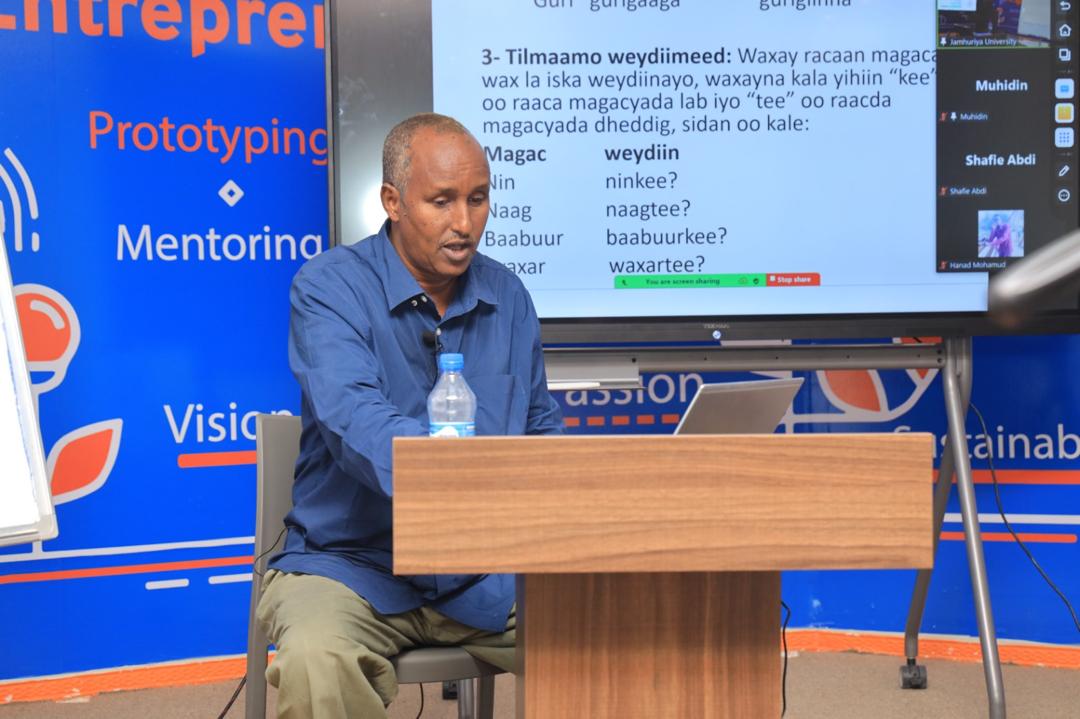
    A capacity-building workshop on Part-of-Speech (POS) Tagging and Lemmatisation for the Somali language was successfully held at Jamhuriya University of Science and Technology. The session was conducted by the team associated with the Somali Fake News Identification Project, with technical assistance and training facilitated by the Academy of Science, Culture and Literature.

    The training session was conducted by Mohamed Mohamud Guled (Daqarre), a member of the Somali Language Committee of the Academy of Science, Culture and Literature, and Chairperson of the Sub-Committee on Grammar and Language Rules.

    The workshop’s major aim was to improve participants’ comprehension of essential computational linguistics techniques employed in the analysis and processing of Somali text. The training concentrated on POS Tagging, which entails the allocation of grammatical categories to words, including nouns, verbs, adjectives, prepositions, and other parts of speech. Participants were also introduced to Lemmatisation, a procedure that reduces words to their base or dictionary form.

    The session was especially pertinent to the Somali Fake News Identification Project, as POS tagging and lemmatisation are fundamental elements in Natural Language Processing (NLP). These strategies facilitate the study of Somali textual data, enhance the recognition of linguistic patterns, and aid in the creation of automated systems proficient in identifying misleading or deceptive information in Somali-language content.

    Participants acquired practical knowledge on the classification, analysis, and preparation of Somali words for computer applications. The workshop emphasised the necessity of creating high-quality digital linguistic resources for the Somali language, particularly in domains such as text categorisation, information retrieval, machine learning, and disinformation detection.

    In conclusion, the workshop offered a significant learning opportunity to enhance understanding of Somali language technology and their application in digital research. Gratitude is expressed to the Somali Fake News Identification Project team for orchestrating the workshop, the Academy of Science, Culture and Literature for its technical support, Jamhuriya University of Science and Technology for providing the venue, and Mohamed Mohamud Guled (Daqarre) for conducting an enlightening and professionally beneficial training session.