Blog

  • Smart University Systems

    Smart University Systems

    Smart University Systems focuses on the digital transformation of higher education in Somalia. This project involves developing AI-driven tools for student performance analytics, automated administrative workflows, and personalized student portals.

    By leveraging data-informed decision-making, universities can better support their students and optimize their operations. Our team works closely with local academic leaders to ensure the systems meet their specific needs and conform to international educational standards.

  • Somali NLP Engine

    Somali NLP Engine

    The Somali NLP Engine is the centerpiece of our research efforts. It is a multi-purpose framework designed to handle the complexities of the Somali language, including its unique morphology and diverse dialects. The engine supports a wide range of tasks, from basic text tokenization and lemmatization to advanced semantic search and document classification.

    By providing a robust API for Somali language processing, we are enabling developers to build smarter applications that truly understand Somali text. This engine is currently being used in academic research, government services, and private sector tech solutions.

  • Somali Machine Translation System

    Somali Machine Translation System

    The Machine Translation project aims to break down language barriers between Somali and the rest of the world. Our neural translation models are trained on large parallel corpora to provide fluent, accurate translations for a variety of domains, including technical, legal, and everyday text.

    We are constantly improving these models with new data and more efficient training techniques. The system is available as a web portal and an API, making it easy to integrate high-quality Somali translation into any digital workflow.

  • Somali Language Dataset Repository

    Somali Language Dataset Repository

    The Dataset Repository is an open-source initiative to centralize and standardize Somali language data for the global research community. It contains diverse datasets, including news text, social media posts, transcribed speech, and parallel corpora for machine translation.

    Each dataset is curated, cleaned, and properly licensed to ensure quality and legal compliance. By lowering the barrier to entry for Somali NLP research, we are accelerating the development of new AI applications for the Somali people.

  • Celebrating the Success of Jamhuriya University’s Research Grant Project on Identifying Somali Fake News through Natural Language Processing and Deep Learning

    Celebrating the Success of Jamhuriya University’s Research Grant Project on Identifying Somali Fake News through Natural Language Processing and Deep Learning

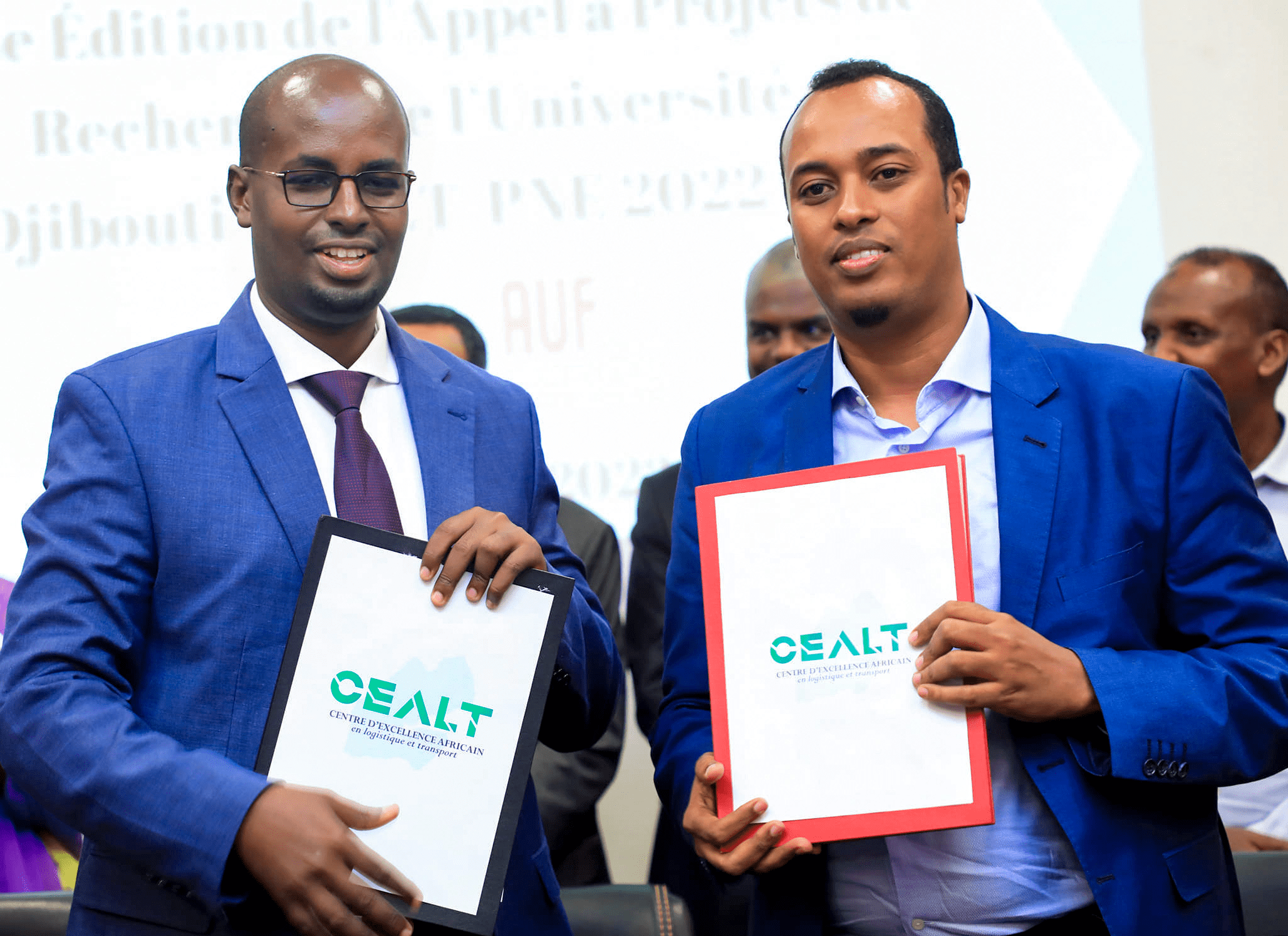
    We are thrilled to announce the recent participation of Eng. Mohamed A. Mohamud, the President of Jamhuriya University of Science and Technology, in the signing ceremony of the winning research project at the prestigious CEALT University of Djibouti. The project, titled Identification of Somali Fake News on social media using Natural Language Processing and Deep Learning, was submitted by the Center for Higher Studies at Jamhuriya University and emerged as one of the 16 victorious research projects out of the 46 entries received from different countries.

    We extend our warmest congratulations to the talented researchers involved in the project – Dr. Muhidin, Dr. Fu’ad, Eng. Shafie, and Eng. Hanad. Their outstanding abilities and relentless dedication have brought great pride and recognition to both Jamhuriya University and the researchers themselves.

    The significance of this research project cannot be overstated, as it addresses the pressing issue of fake news on social media platforms. The proliferation of misinformation has become increasingly rampant, and it is essential to develop effective methods to identify and combat this harmful phenomenon. By utilizing advanced techniques such as natural language processing and deep learning, our researchers aim to detect and classify misleading information accurately and efficiently.